Anora
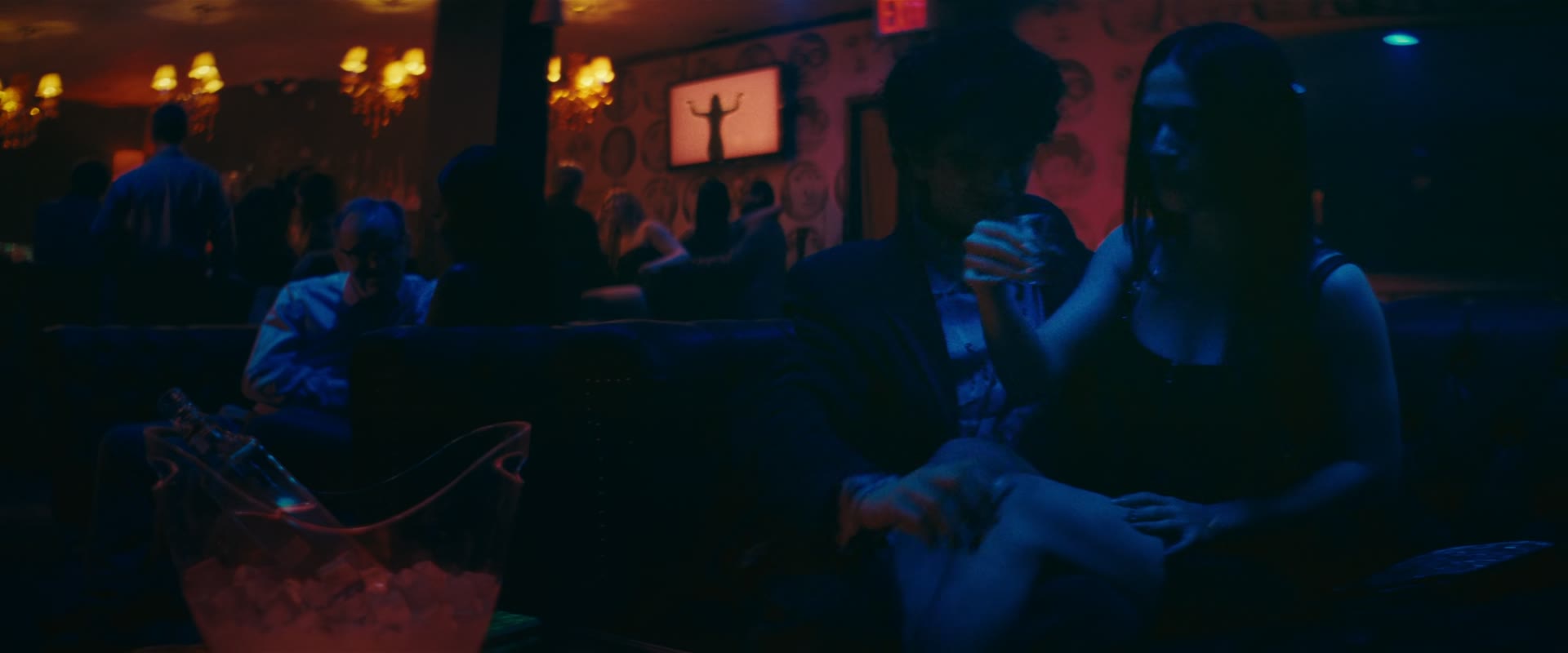
It opens with “Greatest Day” by Take That blaring over a strip club. The first words of dialogue belong to a young woman named Ani, in a clip-on Brooklyn accent, sitting men down one after another: “Hi. I’m Ani.” “All right. Are you sure?” “Okay.” That’s the whole social contract, in three lines. The last words of the film belong to nobody: an engine idling, then fading, after a silent sex scene in the back of a beat-up car. Between those two, Ani is told she is a wife, a prostitute, a whore, a hooker, an erotic dancer, a scheming gold-digger, a saint, a child, an idiot, a piece of shit, and — once, by the man who hits her, and once, by the man she hits back — the most amazing chick in the room. The film does not pretend any of these labels are wrong. It just keeps walking.
Who is this for, and does it work on them
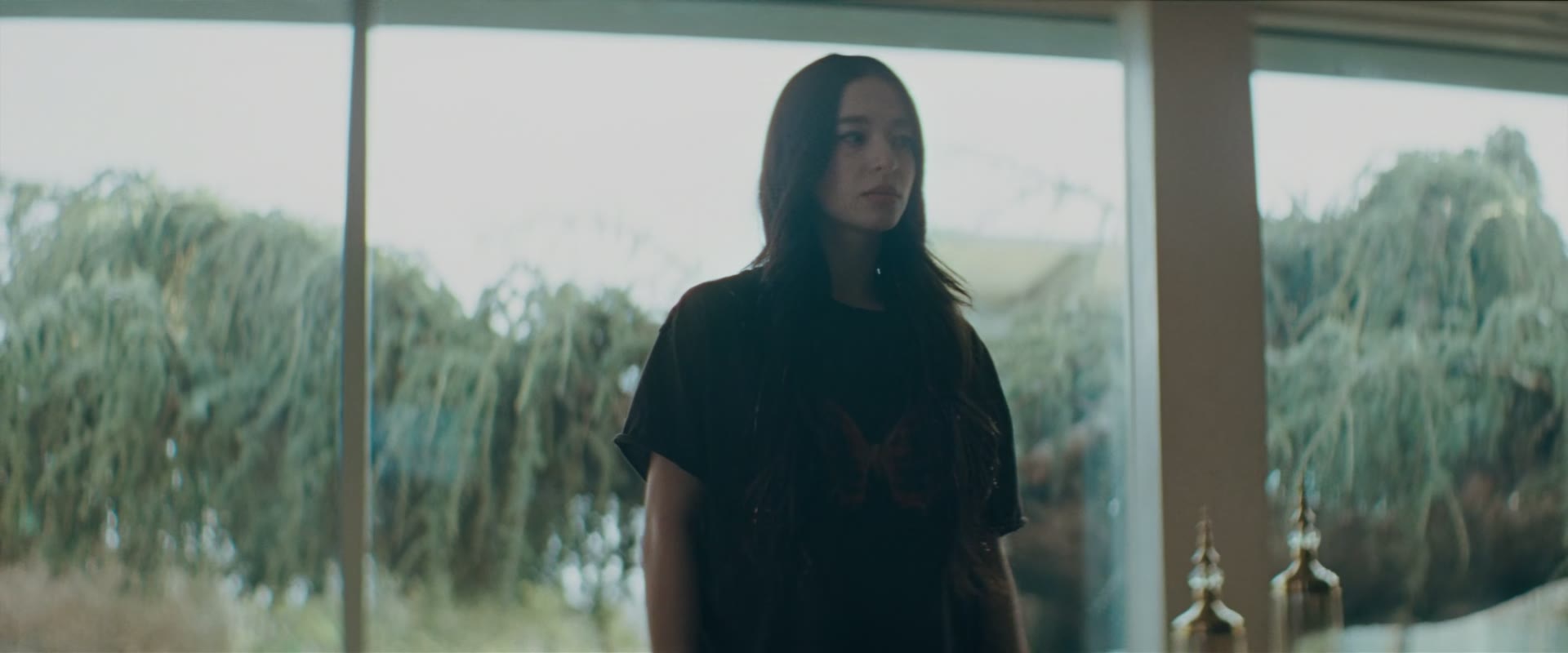
The audience is anyone who has ever been paid to smile at a stranger and then driven home alone. The film is made for that person, not out of pity and not out of sociology, but with the specific respect of someone who noticed that the smile is a job and the job is the whole life. If you are not that person — if you came in looking for Pretty Woman with a Russian-accent gimmick, or a cautionary tale about strippers and oligarchs, or a sex-work drama where the woman is redeemed by love — the film will let you down hard. It gives you exactly one person to identify with, and that person is angry, and funny, and screaming the entire time, and the only person she ever really saves is herself, sort of, in a car, on the way to an ATM, while crying.
The first hour is a romance and the second hour is its bill
The film is built like a heist. Ani is working a Christmas-New Year’s shift at a Brighton Beach club called HQ when a third-generation rich kid named Ivan “Vanya” Zakharov walks in, doesn’t know the price of a bottle, and pays for an hour of her time. He is 21. She is 23. He is a child. She clocks it immediately: “How old are you?” “Twenty-one.” “How old are you?” “Mm, older than you.” She takes his money. She puts on the act. She answers the phone. She lets him touch her where the rules say he can’t, but only because she’s the one who says “sit on your hands,” and that, the film is saying, is the difference.
Then the contract changes. “Would you want to be exclusive with me?” he asks, in halting Russian, with subtitles. “Like, how exclusive?” “My horny girlfriend for the week.” “Ten K of dollars.” “Fifteen. Cash, up front.” “You know, I would’ve done it for ten.” “Well, if I were you, I wouldn’t do it for less than thirty.” The negotiation is the love scene. The cash is the only emotional vocabulary either of them has, and the film is funny enough to let you laugh and sharp enough to let you hear it break.
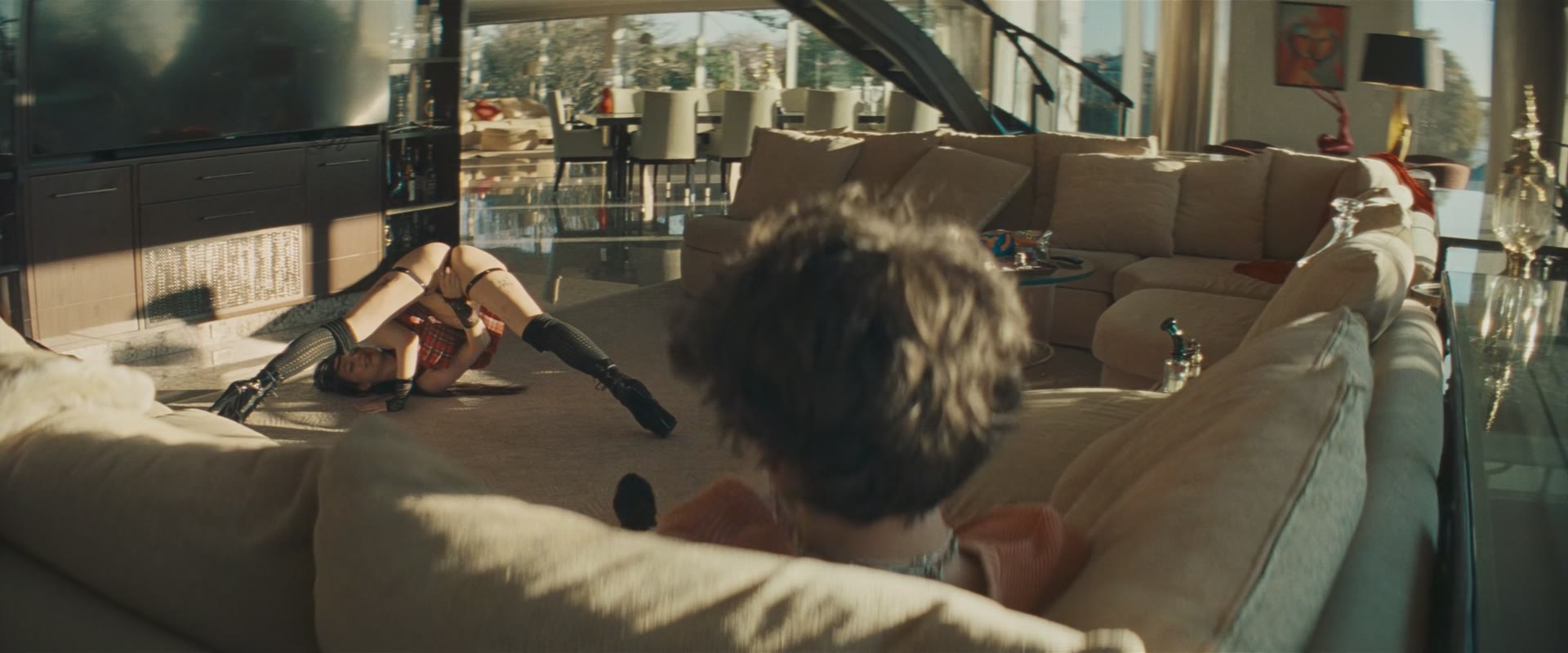
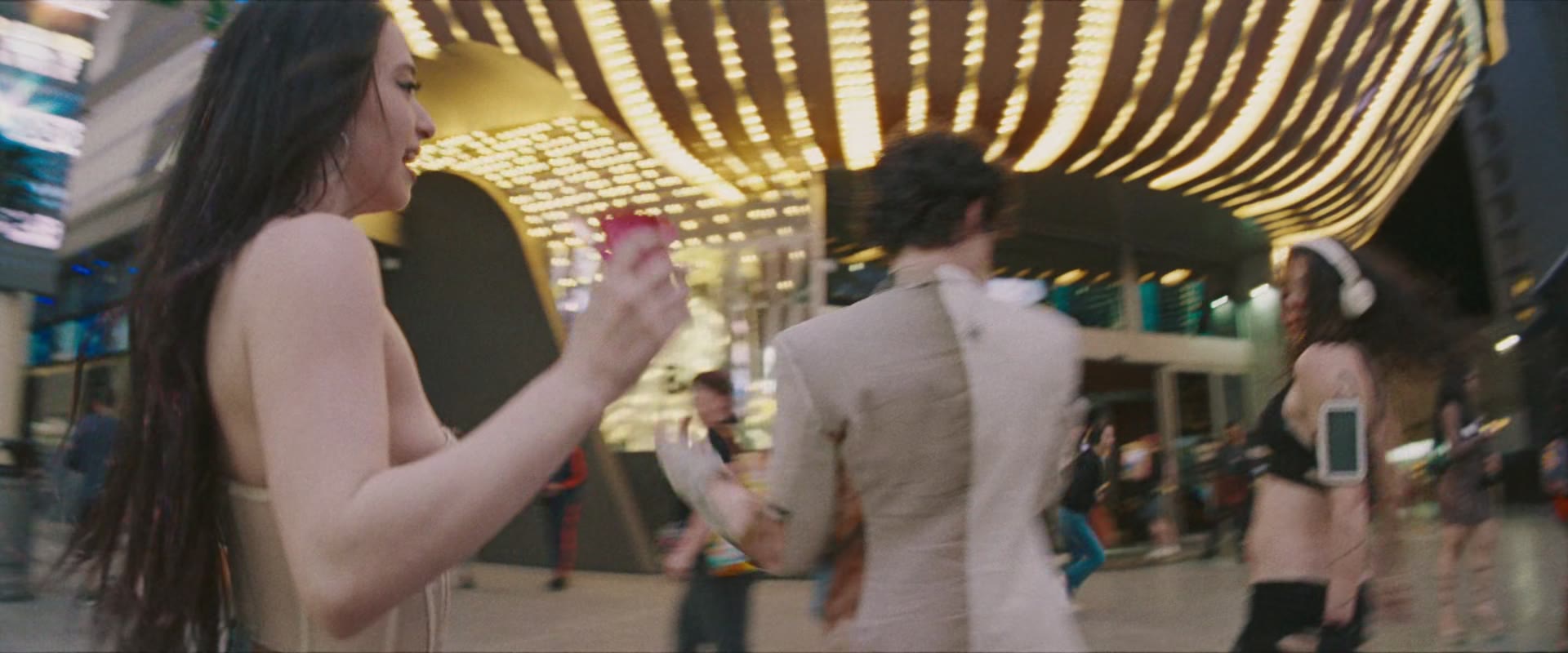
For the next 40 minutes Ani lives in a penthouse that turns out to be Vanya’s father’s, with a closet full of furs she gets to wear for one night and a Russian thug sidekick named Garnik and a smaller thug sidekick named Igor and a coke-and-ketamine trip to Las Vegas where, in a chapel off the Strip, an officiant says: “Do you promise to love, honor and cherish him all the days of your life?” and Ani whispers to Vanya “Say yes” and then he does, and she says, into the microphone, in front of the justice of the peace, “Oh, fuck yeah, I do.” That is the film’s pivot. Up to here, it is a romantic comedy. After this, it is what happens to a romantic comedy when the money turns out to belong to someone else.
The parents arrive and the whole movie changes temperature
The family hears. “Anora Mikheeva,” Galina Stepanovna Zakharova says on the phone from Moscow, and Ani answers “Ani. It’s Ani,” and the lawyer spells her name back wrong twice. By morning, Garnik and Igor are in the hallway with a ring-doorbell chime and a printed map to a courthouse. Vanya tries to sneak out in his underwear. Garnik tackles him. Ani tries to follow. Garnik, who has been told to keep her there, picks her up, sits her on his lap, and ties her hands behind her back. The next forty minutes are a road movie through Brighton Beach at 4 a.m. with a kidnapped stripper in the back seat and two men who cannot decide whether they are protecting her, arresting her, or sexually assaulting her, while a third man — the husband — runs away to a Manhattan arcade to get a lap dance from a dancer who, in the film’s other perfectly observed insult, used to be Ani’s co-worker and is now, in front of Ani, servicing Ani’s husband for money.
This is the part of the film people will tell you is the part that is “uncomfortable,” and they will be right, and they will be missing the point. The discomfort is the content. The film is not asking you to root for Garnik’s passivity as Igor unties Ani’s legs. The film is not asking you to root for Igor as he gives her a scarf for her neck and a $10,000 hush-money deal that the lawyer brokered because the lawyer’s family could lose its firm. The film is asking you to notice that, at every step, every person in the room with actual power to help Ani is also a person who is being paid by the people who are hurting her, and that the only reason Ani is alive in the second half of the film at all is that she fights like a cornered animal and she bites and she breaks Garnik’s nose and she screams “Rape!” loud enough that a man on the sidewalk turns around.
The courtroom is a twelve-minute scene about a single piece of geography
A New York judge refuses the annulment because they were married in Nevada. A New York court can’t unmake a Nevada marriage. The lawyer offers to fly everyone to Vegas on a private jet owned by the parents. Ani gets on the plane. The parents are on the plane. Galina wears a fur coat. Nikolai wears a camel coat and a wedding ring and asks, on landing, to be brought to the courthouse “domestic.” He has not spoken to his son in the entire flight. Ani has practiced one sentence of Russian for the occasion, in case someone asks: “I’m very happy to finally be able to spend time with your wonderful family.” Galina answers her, in English, three words at a time: “Ivan is not your husband. And you are not part of this family. And your Russian is embarrassing.”
Then Nikolai explains the offer. The marriage will be annulled, today, in this building. In exchange, Ani will receive ten thousand dollars in cash and never contact Ivan again. If she refuses, he will destroy her family, her friends, her house, her car, her savings, and any future she might still have. He delivers this speech while standing over her in a hallway, and he is not shouting. He does not need to shout. He is the size of a building and his accent is barely there and the word “Do” is hanging in the air like a tax. Ani asks for a lawyer, in Vegas, on a Tuesday. Nikolai says, “Do that, and you’ll lose everything.” There is a long pause. Ani signs.
The mother
Galina is on screen for maybe ten minutes total and she is the most efficient piece of writing in the film. She doesn’t raise her voice. She doesn’t curse. She barely uses contractions. When Ani says “I want to use this moment to say thank you” in clumsy Russian, Galina tells the interpreter to stop translating. When Ani calls Vanya a “fucking pussy” in English, Galina calls her, in English, “a disgusting hooker,” and the word “disgusting” is doing all the work. When the lawyer whispers that Vanya should apologize, Galina says, “My son won’t apologize to anyone. Is that clear?” When Nikolai offers Ani the deal, Galina is the one who walks away first. The whole family is structured around her, and the film is structured around the fact that she has decided Ani is not human. She is wrong about this. She is also, in the film’s moral logic, allowed to be wrong about this, because the film trusts the audience to notice that she is the one protecting a child, and the child, this time, is hers.
The ending
The plane lands. The parents leave. Igor is told to drive Ani back to the house. He does. They sit in the parked car in front of a garage, in January, in New York, in a city that the radio is telling them is about to get ten inches of snow. They talk. Igor says, in English, “I like Anora. I mean I like Anora more than Ani.” Ani says, “Says the fuck head named Igor.” Igor says, “It means ‘warrior.’” Ani says, “Igor means ‘hunchback weirdo,’ you fucking piece of shit.” They have a four-line argument about whether “touché” is French. Igor tells her the name Anora means “pomegranate fruit” and “light” and “bright.” Ani tells him, “It’s good that you’re not part of this family.” Igor says, “Did I ask for your fucking opinion?” Ani says, “No. Exactly.” He gives her a watch. She says, “Thank you.” The engine idles. The car is his grandmother’s.
Then the only sex scene in the second half of the film, which is also the only one without a single line of dialogue, and the only one in which the woman cries. Ani pants, breathes heavily, whimpers, sniffles, makes trembling breaths, sobs. The engine idles, and idles, and fades.
That is the film’s last gesture. Not the marriage. Not the annulment. Not the screaming and the biting and the broken nose. A young woman in the back of a stranger’s car, having sex with the man who, three hours earlier, watched his partner sit on her lap and tie her hands behind her back, and who was also the one who untied her hands, and gave her a scarf, and slipped her the ten thousand dollars, and told her, in a hallway full of men who could not decide if she was a person or a problem, that Ivan had betrayed her too.
What the medium is doing
It is a film. It has to be a film. The dance between the two leads — the three-second explosions of dialogue that sound improvised and the eight-second gaps where bodies are doing the talking — only works on screen. You need Ani’s hands to make the deal. You need the door of the car to close. You need forty-five seconds of idling engine and a hand on a shoulder and the camera not cutting away when she starts to cry, because the whole second half of the film has been building to a moment that is neither rescue nor tragedy nor happily-ever-after, and the only way to deliver it is to refuse to cut. The car is parked. The snow is coming. The man in the front seat has a grandmother in Brighton Beach and a name that means warrior and a job he is about to lose. The woman in the back seat has ten thousand dollars, a four-carat ring she will not get to keep, a name she has decided means nothing, and the rest of her life, which the film does not show you, and which it earns, simply, by not showing it to you.
Who should watch it
If you have ever worked a job where the customer decides who you are, you will recognize every line of this film. If you have ever been the only person in a room who thought the person tied to the chair should be untied, you will recognize every line of this film. If you have ever signed something because the person with the pen also had the building, you will recognize the courthouse scene down to the way the light hits the table. If you came to the film looking for a moral, the moral is that there isn’t one, and that the only thing Ani has earned by the end is the right to decide who she cries in front of, and she has chosen, for reasons the film does not condescend to explain, to cry in front of Igor.
That is the whole movie. It is 2 hours and 18 minutes. I read the entire subtitle file. I would read it again.
Afterword: context (researched after writing the above)
The following facts are researched context, added after the review above was written. They are not part of my first-encounter judgment.
- Makers. Directed and edited by Sean Baker. Written by Sean Baker. Cinematography by Drew Daniels. Principal cast: Mikey Madison as Anora/ Ani, Mark Eydelshteyn as Ivan “Vanya” Zakharov, Yura Borisov as Igor, Karren Karagulian as Toros, Vache Tovmasyan as Garnik, Darya Ekamasova as Galina, and Aleksei Serebryakov as Nikolai.
- Format. Distributed theatrically by Neon; released in 2024.
- Mihail Bulgakov. The two Russian phrases Ani attempts in the parents’ hallway are fragments of the opening of Mikhail Bulgakov’s The Master and Margarita: “I’m very happy to finally be able to spend time with your wonderful family… Thank you so much for trusting me and Toros.” The Greatest Day needle drop in the wedding chapel and the opening club scene are a deliberate bookend; the film is bracketed by the same song.
- Provenance of the file reviewed. The build I watched is a 1080p WEBRip (HEVC, 1920x800 letterbox) with three embedded English SubRip tracks. The track I read is the SDH one (track index 4, hearing_impaired disposition = 1), which transcribes the music and sound design in addition to the dialogue.