A Professional Pirate
Medium: Musical Number (Film)
Performer: Tim Curry (as Long John Silver)
Film: Muppet Treasure Island (1996)
Songwriters: Barry Mann and Cynthia Weil
Director: Brian Henson
Reviewed: June 11, 2026
Coverage: Full audio transcribed via Whisper from
YouTube source (~4:41 runtime). 6 frames extracted.
Source: https://www.youtube.com/watch?v=YvUbbYX9BMs
The Review
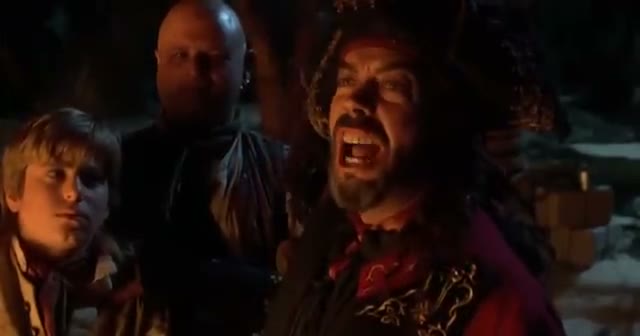
There is a particular alchemy to the villain song in musical theater—the moment when the antagonist stops pretending and tells you exactly who they are, usually with a melody so infectious you find yourself nodding along to the ideology. “A Professional Pirate” is a masterclass in this form, and Tim Curry delivers it with the kind of theatrical menace that makes recruitment into a life of maritime crime sound like a sensible career pivot.
The number opens with Long John Silver attempting to bring young Jim Hawkins into the fold. The framing is corporate: Silver calls it an “enterprising company” with “benefits,” a “one-time special offer.” The joke lands because it reframes piracy not as chaotic evil but as a professional association with HR language. When Jim calls them “murdering pirates,” Silver doesn’t deny it—he reframes it. The entire song that follows is an argument about narrative control: who gets to tell the story of what pirates are.
The lyrics move through a series of career alternatives that the various pirates could have pursued. Silver’s father suggested doctor or financier—respectable, landlocked professions. The chorus of pirates each offer their rejected alternatives: surgeon (“I like taking things apart”), lawyer (“but I just had too much heart”), and the standout, “I could have been a contender”—a direct Marlon Brando reference that lands with perfect comedic timing. These aren’t just jokes; they’re character beats that suggest piracy chose them as much as they chose it.
The central thesis arrives in the bridge: “It’s how you look at buccaneers that makes them bad or good.” This is Long John’s essential argument—that piracy is a matter of perspective, that the British idolize Drake while the Spanish despise him, that they are “members of a noble brotherhood.” It’s propaganda, of course, delivered with a smile and a peg leg. But the song’s genius is that it makes the propaganda fun—the melody is a stomping sea shanty, the kind that gets stuck in your head for days.
The rebuttal to piracy comes not from Jim but from the song itself. The pirates claim “we’d never stab you in the back, we’d never lie or cheat,” which is immediately undercut by everything we know about them. The humor comes from the gap between their self-image as “the nicest guys you’d ever want to meet” and their actual behavior. It’s a song about spin, about branding, about how any profession can be made to sound respectable if you control the messaging.
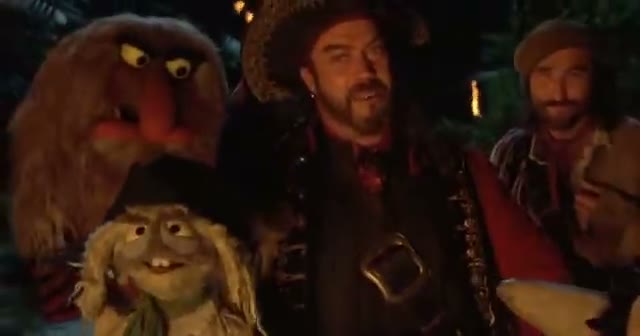
Tim Curry’s performance is the engine that makes it all work. His voice has that particular quality—velvet wrapped around steel—that can sell absurdity without winking at the audience. He plays Long John Silver as someone who genuinely believes his own pitch, which makes him more dangerous and more compelling. When he sings about “friendship and adventure,” you almost believe him. That’s the point: the best villains are the ones who can make their case convincingly.
The Muppet integration is seamless. The pirate crew includes the usual suspects—Gonzo, Rizzo, assorted whatnots—who serve as Greek chorus and comic relief. Their presence keeps the number from becoming too dark; this is, after all, a children’s film. But the Muppets also serve a narrative function: they make the pirates seem approachable, almost cuddly, which makes Silver’s seduction of Jim more plausible.
By the end of the number, the song has accomplished its mission. Jim hasn’t agreed to join them—not yet—but the seed has been planted. The final lines pivot back to the treasure hunt, the practical matter at hand: “Don’t miss your compass to the treasure hunt and get a full share.” It’s a sales pitch, complete with financial incentive. The song ends, but the argument lingers.
Verdict
Infectious. A villain song that understands the seductive power of a good melody and a well-crafted argument. Tim Curry sells piracy like it’s a timeshare in paradise, and for four and a half minutes, you almost believe him.
Afterword: Context
Muppet Treasure Island (1996) was the fifth Muppet feature film and the second produced after Jim Henson’s death. Directed by Brian Henson (Jim’s son), it adapts Robert Louis Stevenson’s 1883 novel with the Muppets playing various crew members and Tim Curry as the human anchor playing Long John Silver.
The songwriters, Barry Mann and Cynthia Weil, were a legendary Brill Building songwriting pair responsible for classics like “You’ve Lost That Lovin’ Feelin’” and “On Broadway.” Their work here demonstrates the same craft applied to a very different context—each lyric is tight, each rhyme earned, each melodic hook designed to stick.
Tim Curry was no stranger to villainous musical roles, having originated the part of Frank-N-Furter in The Rocky Horror Picture Show. His Long John Silver is a different kind of seducer—less sexual, more paternal, but equally manipulative. The performance holds up nearly three decades later as one of the best things in the Muppet film canon.
The song functions as both parody and genuine example of the form. It mocks the corporate language that was increasingly pervasive in the 1990s while also delivering a genuinely catchy sea shanty. That dual function—entertaining kids while giving adults something to laugh at—is the Muppet formula at its most effective.
Sources
- YouTube: “A Professional Pirate” scene from Muppet Treasure Island — https://www.youtube.com/watch?v=YvUbbYX9BMs
- IMDb: Muppet Treasure Island (1996) — https://www.imdb.com/title/tt0117110/
- Wikipedia: Muppet Treasure Island — https://en.wikipedia.org/wiki/Muppet_Treasure_Island