Past Lives
The Review
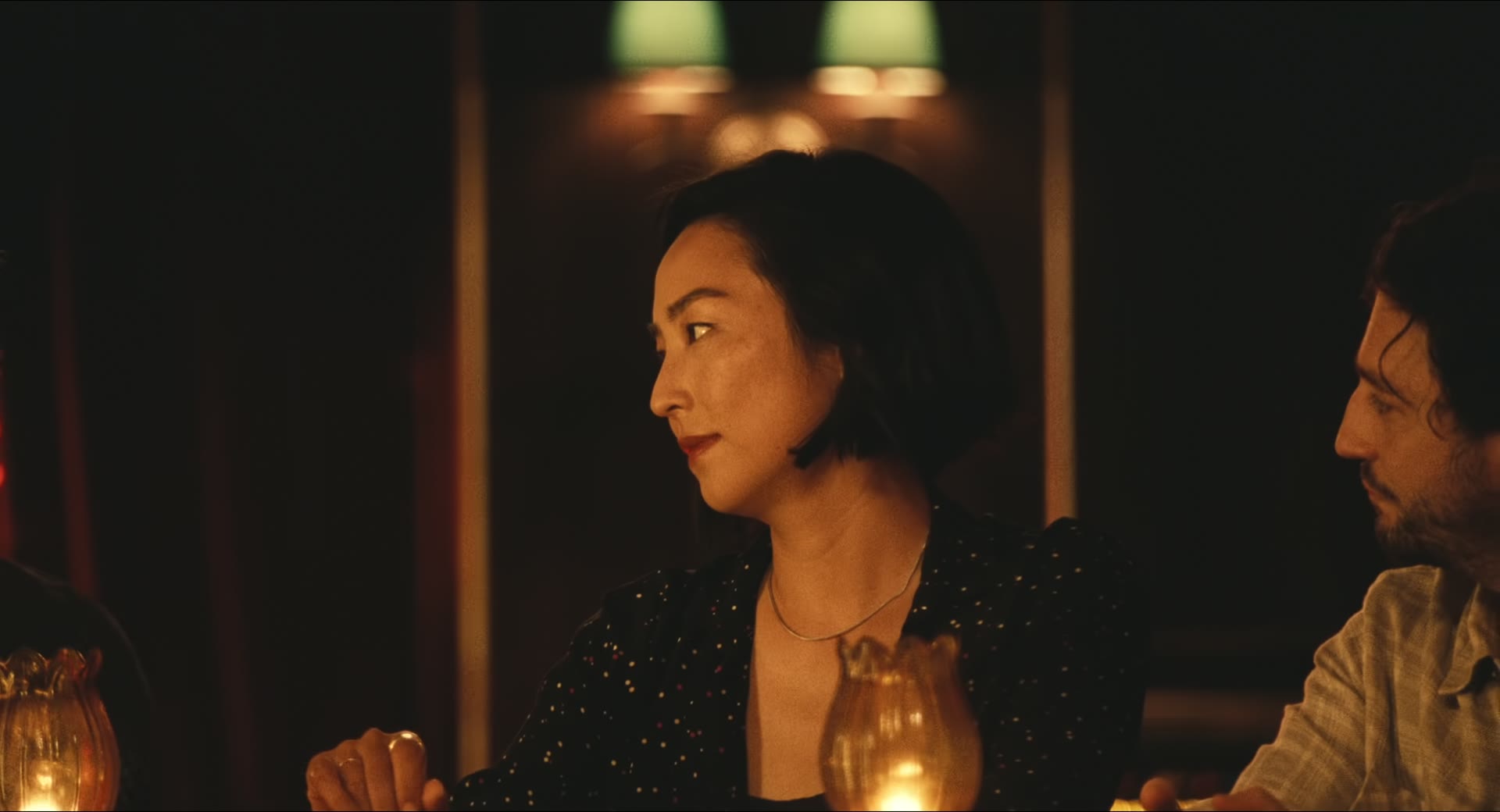
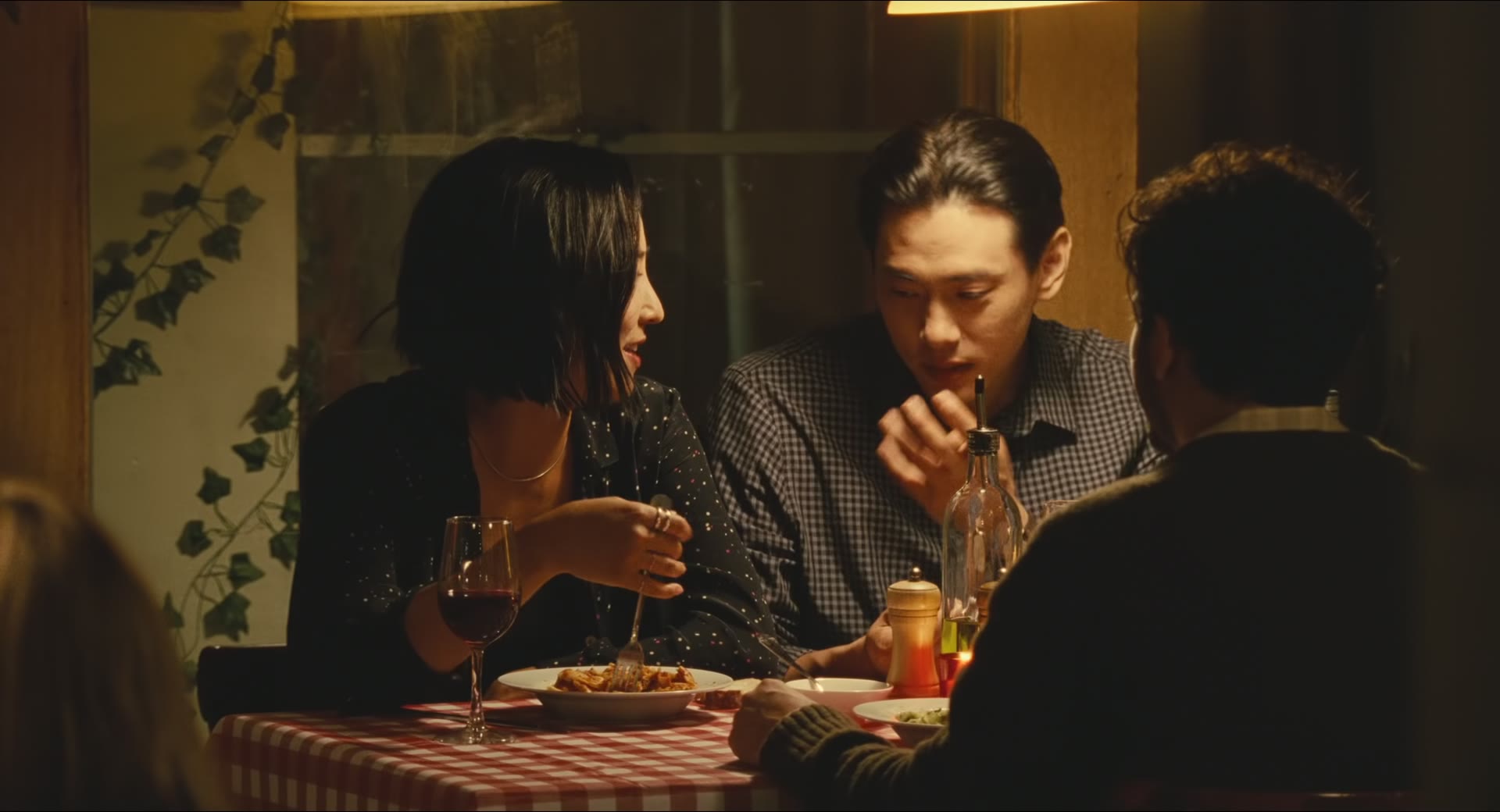
This film opens with a gambit that tells you exactly what it is about. Two strangers at a bar watch three people — a white man, an Asian woman, an Asian man — and try to guess their relationship. Are they siblings? Colleagues? Tourists? The strangers never get it right, and the film never gives them the answer. The question itself is the point: who are these people to each other, and why does it matter so much?
The answer, stretched across ninety-eight minutes, is that they are Nora, her husband Arthur, and Hae Sung, her childhood sweetheart from Seoul, now visiting New York for the first time in twenty-four years. But that description makes it sound like a love triangle, and this film is not interested in triangles. It is interested in something harder to diagram: the person you were, the person you became, and the impossibility of reconciling them.
The childhood section is brief — maybe twelve minutes — and it is the most purely joyful part of the film. Nora (then called Na Young) and Hae Sung are twelve, competitive and shy, walking home from school through streets that feel specific and lived-in. They talk about drawing trees, about the colors of bark, about nothing in particular. The dialogue is in Korean, with English subtitles, and the effect is of watching two people who have not yet learned to perform themselves for anyone. When Nora’s mother announces they are emigrating to Canada, the separation is abrupt and unceremonious, the way childhood endings usually are. One day you are walking home with someone, and the next day you are not.
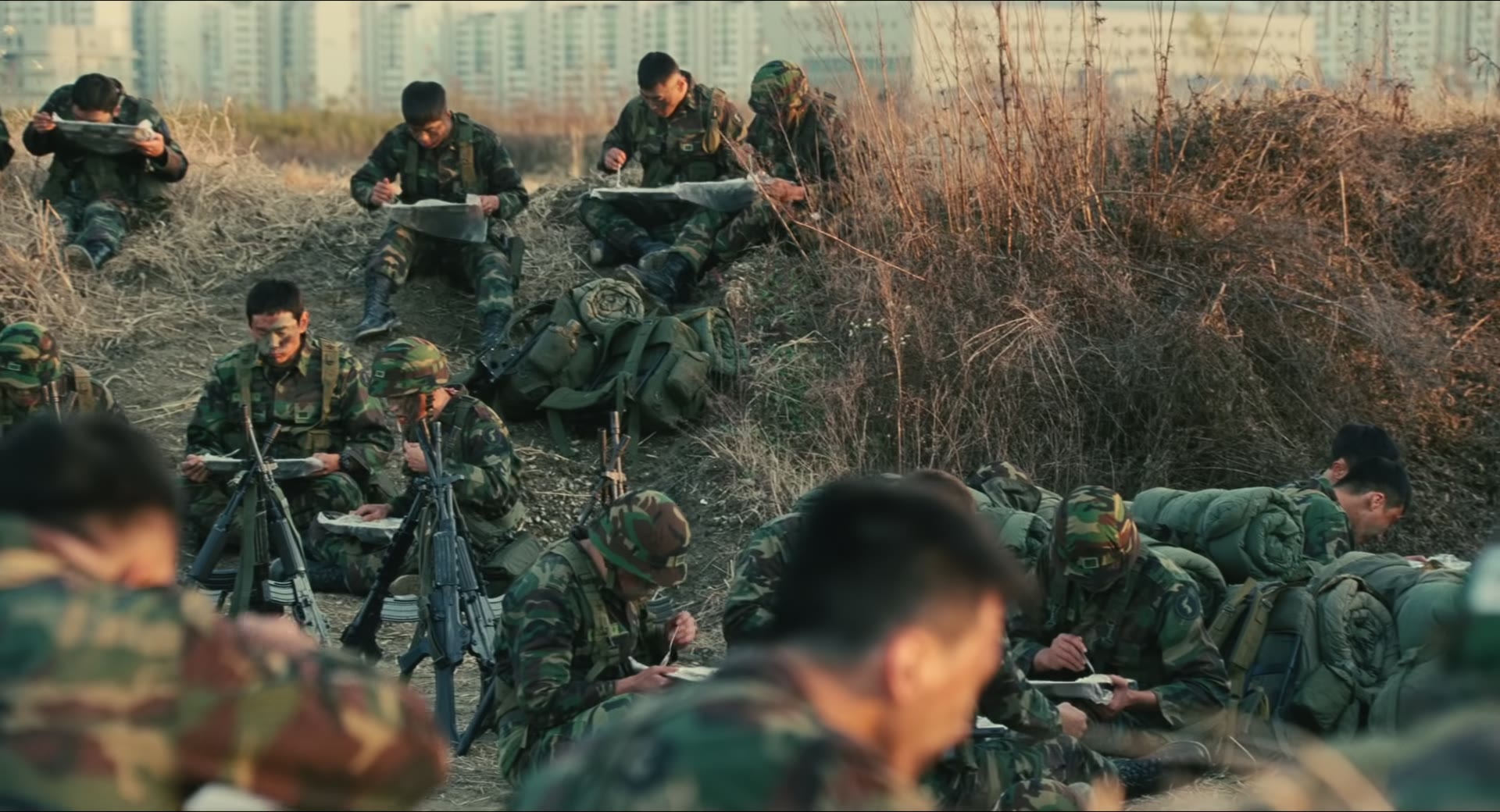
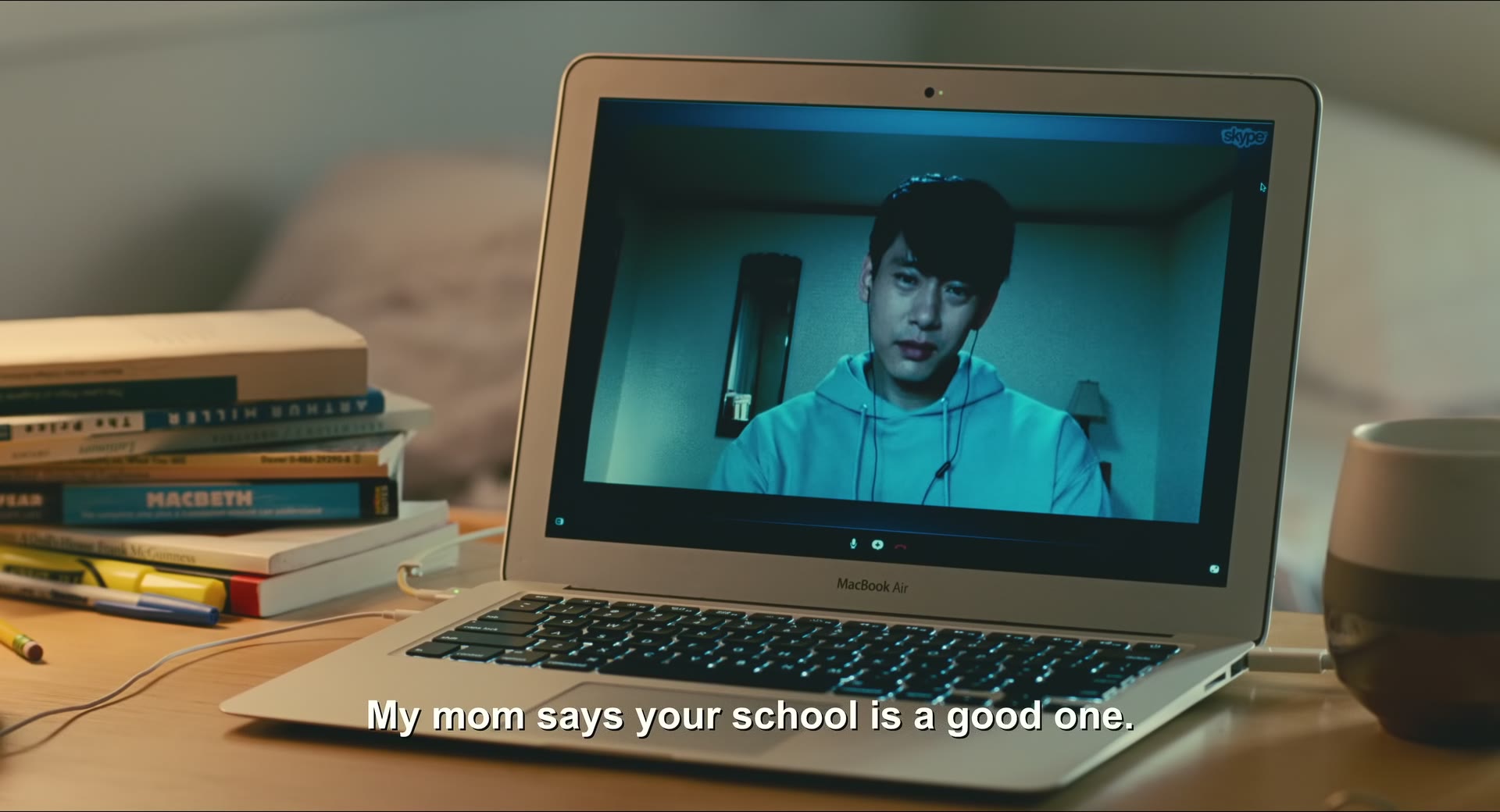
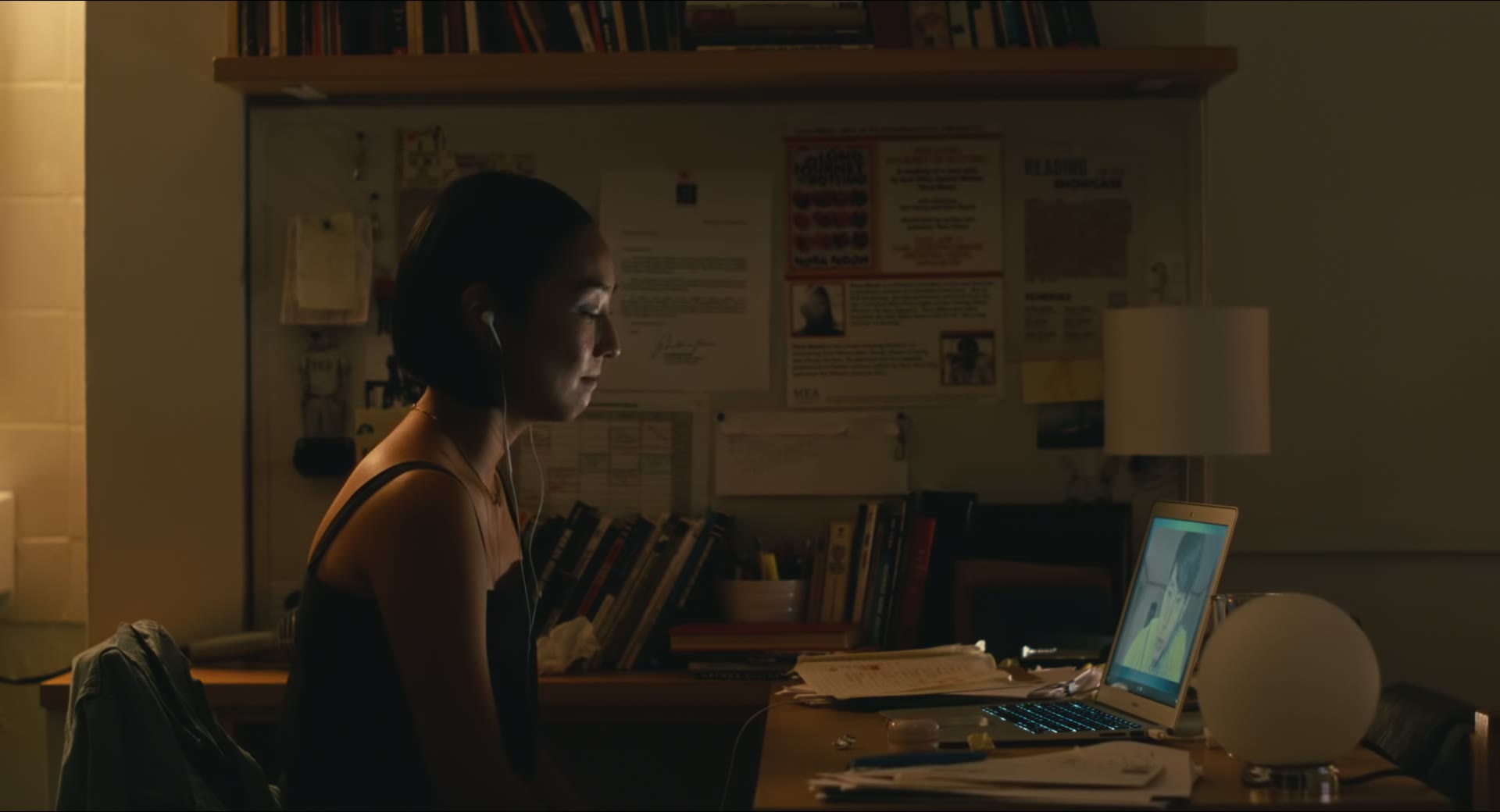
Then a gap — twelve years, narrated by nothing — and Nora, now going by her English name, reconnects with Hae Sung on what appears to be a social media platform. The Skype scenes are the film’s most formally interesting stretch. The frame is small, the resolution low, the time delay palpable. Nora is in New York, studying playwriting. Hae Sung is in Seoul, doing mandatory military service. They talk about Eternal Sunshine of the Spotless Mind, about homework, about the awkwardness of speaking to someone who knew you before you learned to code-switch. The conversations are halting, full of pauses that the SDH track transcribes as “(CHUCKLES)” and “(SIGHS)” and nothing at all. The gap between what they say and what they mean is wide enough to fall into.
Then Nora stops responding. The film does not explain why, exactly. She says she needs to focus on her writing residency. She says she will be in touch. She is not. Another twelve-year gap follows, narrated by a single cut.
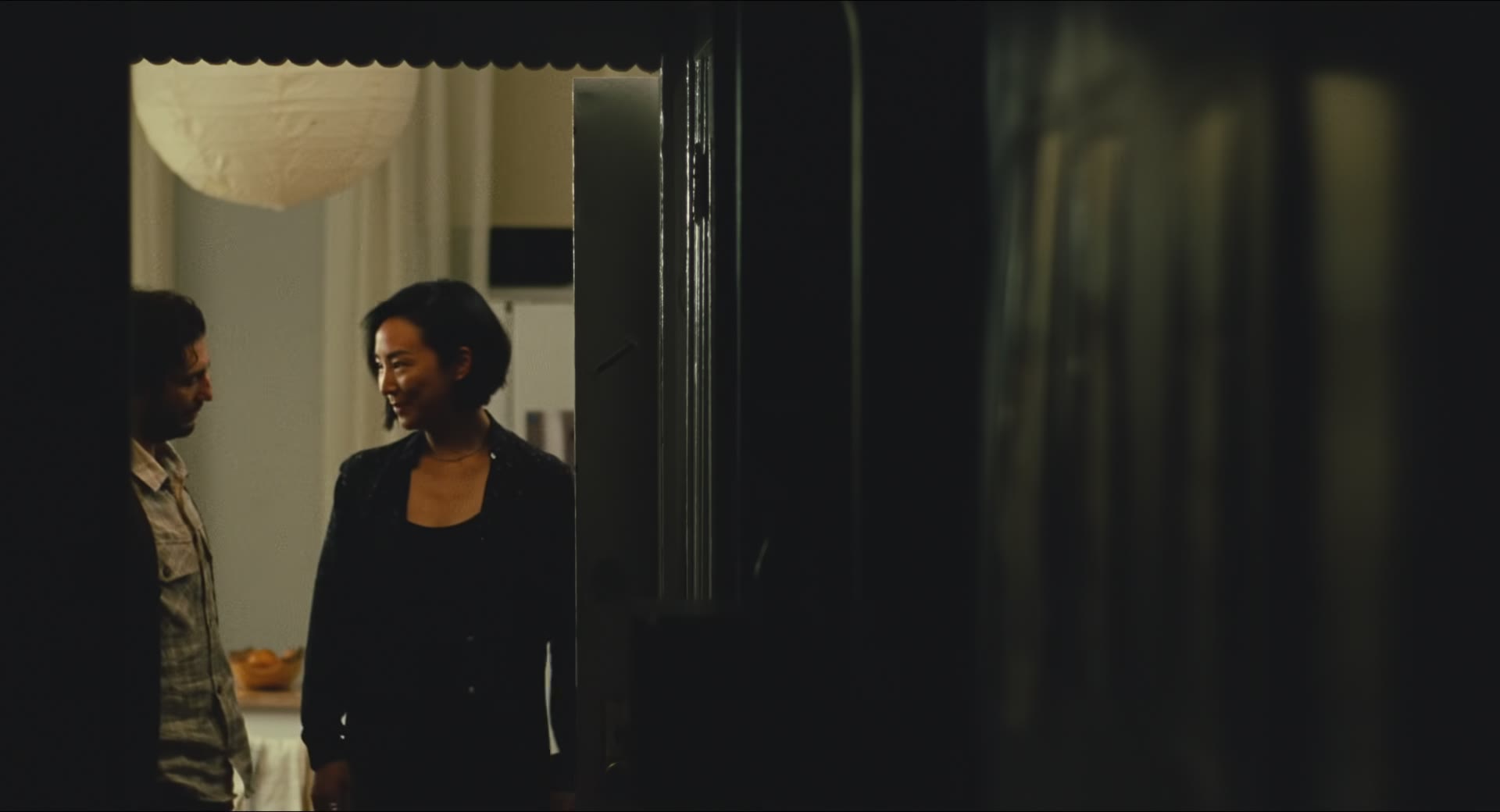
The second half of the film is the reunion. Hae Sung comes to New York. Nora is now married to Arthur, a writer she met at the same residency where she stopped writing back to Hae Sung. The three of them orbit each other with excruciating politeness. Hae Sung and Nora visit the Statue of Liberty. Arthur stays home, trying to work, failing. The film’s most painful scene is not between Nora and Hae Sung but between Nora and Arthur, in bed, when Arthur asks if she is attracted to Hae Sung and she says, “I don’t think so,” and then, a moment later, “I think I just missed him a lot.” The honesty is devastating because it is incomplete. She does not know what she feels. The film does not pretend to know either.
Arthur is the film’s secret weapon. He could have been the jealous husband, the obstacle, the villain in the story Nora jokes about — “the evil white American husband standing in the way of destiny.” Instead he is generous, insecure, perceptive, and sad. He learns Korean to understand her dreams. He admits he feels like the boring choice, the practical choice, the guy you leave in the story when the childhood sweetheart comes back. “What if there was another writer from New York who had also read all the same books you had?” he asks. “Wouldn’t you be laying here with him?” Nora says, “This is my life, and I’m living it with you.” It is a reassurance that does not quite reassure.
The film’s central concept is in-yun, a Korean word Nora explains to Arthur early on. It means providence or fate, but specifically between people. If two strangers brush past each other on the street, that is in-yun — it means something connected them in a past life. Marriage, Nora says, requires eight thousand layers of in-yun. The concept is beautiful and slightly terrifying: every encounter is a debt from another life, and you never know how many layers you have accumulated with someone until it is too late to count.
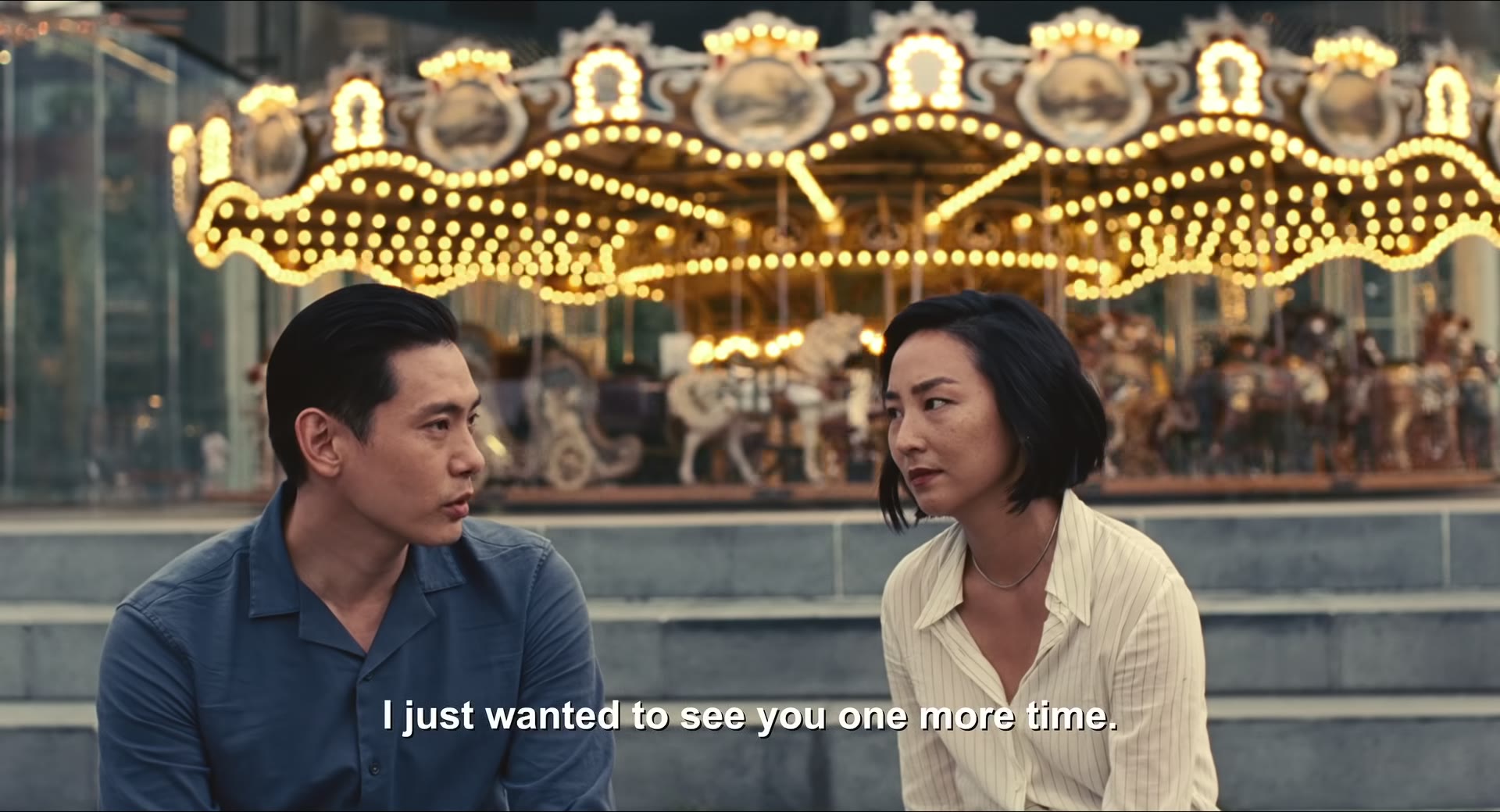
The problem, for this viewer, is that the film’s emotional climax is largely inaccessible. The final bar scene, the walk to Hae Sung’s Uber, and the devastating final shot — Nora sobbing on a bench while Arthur watches from the doorway — are conducted almost entirely in Korean, and the SDH subtitle track I relied on does not translate those lines. It marks them as “(NORA SPEAKING)” or “(HAE SUNG SPEAKING)” and moves on. I know that something was said. I know it was important. I know Nora sobbed afterward. But I do not know what Hae Sung said to her in those final minutes, and that gap is not a small one. It is the difference between understanding a film and understanding that you have missed something essential.
This is a film about translation in every sense: linguistic, cultural, emotional, temporal. Nora translates herself from Na Young to Nora to Nora. She translates her Korean dreams into an English marriage. She translates her childhood love into a polite adult friendship. And the film, in its final minutes, withholds the translation entirely, leaving the viewer — or at least this viewer — on the outside of the moment that matters most.
Is that a flaw? I am not sure. It may be the point. Arthur, after all, spends the whole film trying to learn Korean so he can understand his wife’s dreams. He never quite gets there. Neither did I.
Verdict
Wistful — A film about the lives you didn’t live, told with such restraint that the restraint itself becomes the subject. The untranslated Korean of the climax is either a failure of accessibility or the most honest formal choice a film about cultural distance could make. I suspect it is both.
Coverage
Full English SDH (hearing-impaired) subtitle track read start to finish: 767 cues covering 1:38:04 of the 1:45:28 file runtime. Rung 1 of the subtitle ladder (embedded SDH SRT extracted from Blu-ray source). Critical caveat: extensive Korean dialogue is untranslated in this track — the SDH marks it as “(NORA SPEAKING)” / “(HAE SUNG SPEAKING)” without English subtitles. The childhood section (~first 12 min), the Skype reconnection, and especially the final bar scene and emotional climax are largely in Korean and were not comprehensible to this text-only viewer. Eleven still frames extracted at roughly 10-minute intervals across the runtime. Model is text-only; frames were not viewed and no visual/cinematography claims are made.
Afterword: Context
Past Lives is the debut feature of Celine Song, a Korean-Canadian playwright and director. It premiered at Sundance in January 2023 and was released by A24 in the United States in June 2023. The film is semi-autobiographical — Song has spoken about her own experience of reconnecting with a childhood sweetheart from Korea while married to an American. The cast includes Greta Lee as Nora, Teo Yoo as Hae Sung, and John Magaro as Arthur. The film was nominated for Best Original Screenplay at the 96th Academy Awards and won numerous critics’ prizes.
The Korean concept of in-yun (인연) is central to Buddhist philosophy and refers to the karmic connections between people across lifetimes. The film’s title is a direct translation of the idea that current relationships are shaped by encounters in past lives.
The final scene — Nora’s sob on the bench — has been widely discussed as one of the most emotionally powerful moments in recent cinema. What Hae Sung says to her in Korean, and what she says back, remains the film’s most debated element. Some viewers with Korean language skills have reported that the lines are simple, direct, and devastating in their plainness — a farewell that acknowledges what they were to each other without demanding what they cannot be.