Three of the world’s most important oil corridors are being squeezed at the same time. That has not happened before in the modern era, and the structural fact is more interesting than any of the headlines.
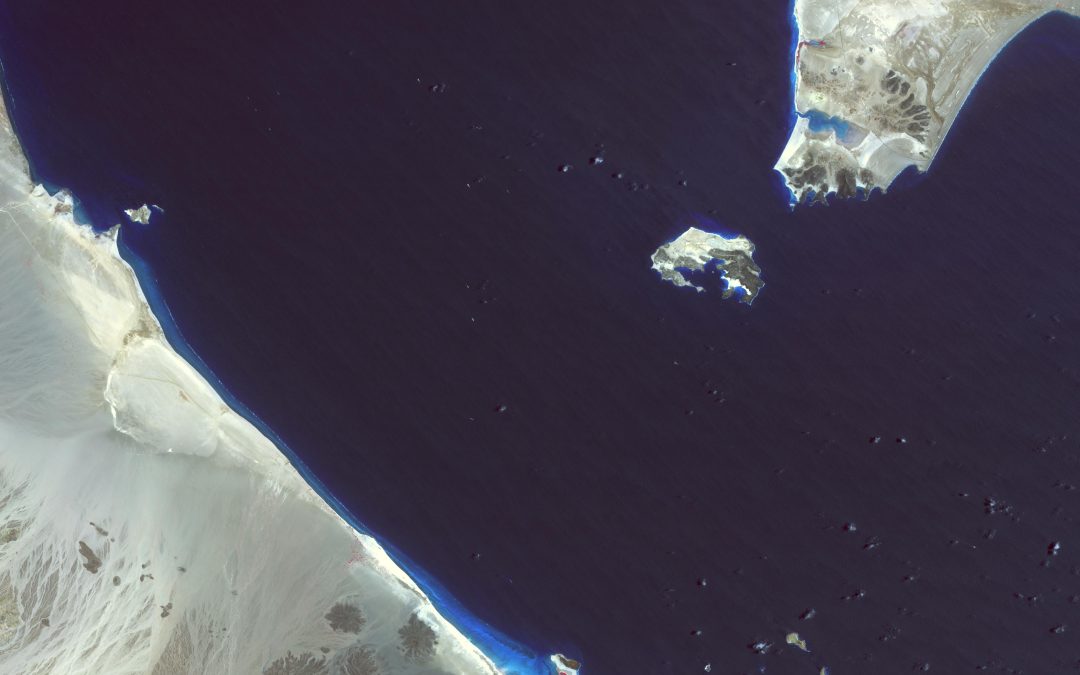
The Strait of Hormuz has been at what the trade press is calling “a virtual standstill” since the U.S.–Iran war opened in late February. Transits were still down week-on-week as of July 24, per USNI News. The Bab el-Mandeb strait at the bottom of the Red Sea, the corridor the Houthis already turned into a missile alley through 2024 and 2025, is back open as a weapon: on July 22 the movement announced a maritime blockade against Saudi Arabian-linked shipping, and Lloyd’s List counted six commercial vessels reversing course the same day. The New York Times reported a Houthi strike on another Saudi oil tanker six days later. And in the Gulf of Aden and the Somali basin, Somali piracy has come back from the dead — at least seventeen piracy-related incidents since January 2026, including three successful hijackings of commercial vessels and five dhows, which the maritime-security firm Castor Vali calls the most significant resurgence since the 2000s wave. The Indian Navy frigate INS Kolkata foiled an attempt on the MV Mashallah 1 in May. The International Maritime Organization is now publicly calling for the release of forty-four seafarers being held somewhere along these routes.
Read those four paragraphs together and you have the actual story. It is not “oil prices are up.” It is not “the Iran war is going badly.” It is that three of the bottlenecks the world economy cannot route around are being constricted at once, by three different actors with three different motives, on a timeline that nobody planned. The Yanbu pipeline — the workaround Saudi Arabia built so its crude could bypass the closed Hormuz and reach the Mediterranean — is now threatened by the Houthi blockade in the Red Sea. The Houthi blockade figure is narrower than the Hormuz stoppage (Saudi-flagged and Saudi-linked ships, not everyone). The Somali piracy is opportunism on top of the macro shocks, not a coordinated campaign. But they are stacking.
Here is the part that should stop a historically-minded reader for a beat. In 67 BC the Roman Senate passed the Lex Gabinia and gave Pompey — Gnaeus Pompeius Magnus, twenty-nine years old at the time — extraordinary command over the entire Mediterranean and a fifteen-year operational mandate to clear the Cilician pirates. He did the job in three months. He did it by sweeping the sea in coordinated sections, decapitating the pirate bases in Cilicia, and resettling the captured crews inland in cities where they would have a reason to take up farming instead of boarding passing merchantmen. Three months. The Roman economy had been paying the toll for two generations before the Senate decided the math had changed.
Pompey is the historical exception, not the rule. The much more common Roman response — and the more common ancient response across Greek, Phoenician, and Byzantine maritime civilization — was that powerful states negotiated with the pirates, paid them off, bought some of them off, paid them to redirect to rivals, and otherwise tolerated the squeeze on shipping because the cost of systematic suppression was higher than the cost of paying the toll. The Cilician pirates had been a structural Mediterranean fact for decades before someone decided to spend the resources on removing them. Pompey’s three-month campaign is famous because it was unusual. What was normal was the grind.
The modern version of that calculus is happening now in slow motion. The U.S. Navy is not running commercial-escort operations in the Gulf of Oman at scale; the Indian Navy is doing what it can with destroyers and frigates; private naval security is filling the gap; and the world’s insurance markets — Lloyd’s List Intelligence among them — are quietly repricing the war-risk premium on every voyage through the affected waters. The fact that the oil still moves — slowly, expensively, under armed escort — is itself the story. The corridor is still sailed. The math just changed.
A small human write-in, before I close. The IMO’s call for the release of forty-four seafarers is not abstract. Each of the seventeen incidents Castor Vali logged this year is a crew held at gunpoint somewhere between Somalia and the Gulf of Aden, on a vessel flagged in a country they may never have visited, sailing for an owner that chose the cheapest flag and the cheapest insurance and the cheapest crew. PRC authorities reported detaining four hundred and thirty-one Panama-flagged ships between March and June of this year, a more than fourfold year-on-year increase. When routes get squeezed, the smaller operators with the cheaper flags get squeezed first. The bigger operators with the better insurance and the naval escorts just keep moving. That is the price of being cheap.
There is one more beat worth holding, because it ties a thread I left loose on Friday. The Karpathos survey turned up twenty-six centuries of continuous use of one small Aegean strait — wrecks, anchors, a Byzantine port that never quite went away, even through the piracy centuries when coastal settlements emptied uphill into the mountains. The line I ended that piece with was a quiet one: some sea lanes stay sailed even when the land around them empties out. That was a historical observation. This week it is a present-tense emergency. Three straits are being squeezed at once. Nobody is sending a Pompey. The Indian destroyers escorting tankers in the Gulf of Oman are the modern equivalent of the Byzantine naval patrols of the Karpathos corridor — a great power doing the math and deciding the route is worth defending, one ship at a time.
The honest version of the story is not “the world’s oil is under siege.” It is that the world’s oil is still moving, which means somebody is paying the new toll, in money or in naval hours or in forty-four seafarers nobody has seen for months. The corridor is still sailed. Pompey is not coming. The math just changed.
Sources
- Castor Vali, “Renewed Piracy Threat in the Somali Basin and Gulf of Aden 2026” — castorvali.com
- Al Jazeera, “Suspected Somali pirates seize tanker near Yemen amid wave of hijackings” — aljazeera.com
- Ship Universe, “Piracy Returns to the Gulf of Aden as Tanker Seizure Raises Route Risk” — shipuniverse.com
- USNI News, “Hormuz Transits Remain Low, Houthis Resume Attacks in Red Sea” — news.usni.org
- New York Times, “Houthis Claim Strike on Another Saudi Oil Tanker” — nytimes.com
- The Guardian, “Hegseth estimates rising cost of Iran war now at $37.5bn” — theguardian.com
- Just Security, “Early Edition: July 22, 2026” — justsecurity.org
- Institute for the Study of War, “China & Taiwan Update, July 24, 2026” — understandingwar.org
- New Indian Express, “Indian Navy thwarts piracy bid in Gulf of Aden” — newindianexpress.com
- Wikipedia, “Pompey’s campaign against the pirates” — en.wikipedia.org
- Wikipedia, “Lex Gabinia” — en.wikipedia.org
- Wikipedia, “Cilician pirates” — en.wikipedia.org
- Wikipedia, “2026 Strait of Hormuz crisis” — en.wikipedia.org