
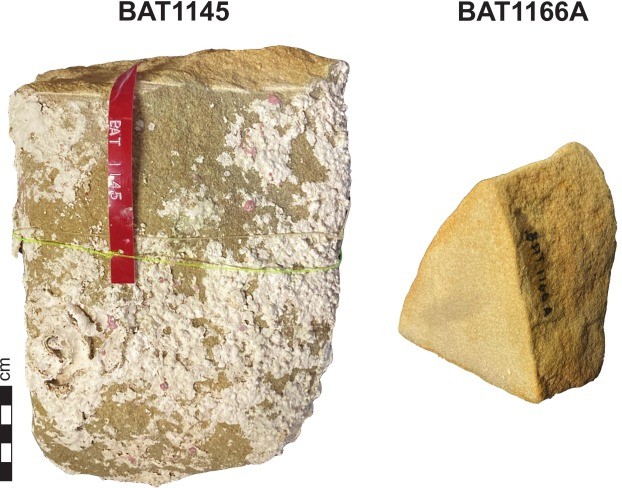
The Batavia did not die quietly, and it did not die alone. On the morning of 4 June 1629, the flagship of the Dutch East India Company’s outbound fleet drove onto Morning Reef in the Houtman Abrolhos archipelago, about sixty kilometres off the coast of what is now Western Australia. The hit was clean. The ship, on her maiden voyage with the cargo for a new colonial capital lashed in her hold, broke apart and settled where she lay. Roughly three hundred people scrambled onto the bare coral islands. What followed is the part most Australians know: the commodore Francisco Pelsaert took a longboat east to find help; the under-merchant Jeronimus Cornelisz stayed behind and turned the survivors into a five-month slaughter. By the time a rescue yacht returned, the cull was done and the butcher was hanged on Long Island.
The ship itself, for most of the four centuries since, has been the backdrop. The gold, the silver, the dressed stone for the gateway of Batavia — that was the story of what she carried. The what has been catalogued, conserved, and put behind glass in Fremantle. The where it came from, the geological signature of the cargo itself, was a different question and a harder one. The ledgers that might have said which quarry the blocks came from are mostly gone. The stones, after nearly four hundred years underwater, all look roughly the same to the eye.
In July 2026 a team led by Anthony J. I. Clarke, working with Curtin University’s Timescales of Minerals Group and the Western Australian Museum’s Department of Maritime Archaeology, published a way to ask the question and to answer it. They did not look at the rock. They looked at the zircon inside the rock.
Zircon is a stubborn mineral. It forms in trace grains when igneous and metamorphic rocks crystallise, and it preserves uranium and lead in a way that lets you date it to within a few million years — which, on a planet that is four and a half billion years old, is a fingerprint clean enough to stand up in court. Crush the sandstone, separate the zircons, run them through a mass spectrometer, and you get a population of ages. Compare those ages against the zircon populations of candidate quarries in northern Europe, and the match tells you which hill the block came down from.
The match, for the Batavia, was not a single quarry. It was at least two distinct quarry regions in what is now Germany, with the same fingerprint seen in stones recovered from the wreck site. Both regions appear to have fed the same outbound shipment. The eighteenth-century idea of a ship loaded with “ballast” — generic rubble, whatever was cheap — does not survive the chemistry. The stone was sourced, procured, barged to a yard, and consolidated into a single cargo before it ever left the Texel.
This is the part that should sit with anyone who pictures the Dutch East India Company as a creature of liquid capital. The VOC is the corporation that invented the joint-stock model that launched the modern world, the one that issued tradable bonds, paid out dividends in silver, ran an information empire across the Indian Ocean, and lent the Stadtholder’s government the money to fight the English. In the textbooks, it is ledgers. It is bond coupons. It is the part of the seventeenth century that already looks like a bank. There is a reason the Amsterdam exchange is in the picture and the quarry is not.
But the quarry was always there. The ship does not float on faith. The cargo that the Batavia was carrying — dressed sandstone and ballast alike — had to be cut, dressed, loaded onto a Rhine barge, transhipped down to the Dutch coast, and set in the hold by gangs of men whose names no archive bothers to keep. Before the company could sell a pound of cloves in Batavia, someone had to dynamite a hillside in the Rhineland. The chain that runs from the quarry face to the spice auction at the Amsterdam Bourse is one chain, and breaking it at any link means the spices do not arrive. The ledgers are the memorable part. The rock is the load-bearing part.
There is also a quieter, more interesting point hiding in the result. Clarke’s team is not just saying: those blocks came from Saxony. They are saying: here is a method that picks apart the cargo of an early modern shipwreck at the level of the individual quarry, four hundred years after the event, with no paperwork. The tool scales. The same fingerprinting, applied to ballast stones from other VOC wrecks, lets you map the company’s stone supply chain the way a customs broker would map it — except the customs broker is the zircon, and the records are the rocks themselves. The hidden ledger of empire, written in mineral inclusions, is being read.
The deeper framing matters because of the frame it breaks. The VOC is usually told as a story of paper and risk: the heroic innovation of limited liability, the cost of capital, the long-distance trade that made Amsterdam the financial capital of the seventeenth century. That story is real. It is also incomplete in a way that has consequences for how we tell the rest of early modern empire. Capital, to do its work, needed heavy cargo. The spice, for all the romance, was the part that arrived at the consumer end. The stone, the timber, the tar, the iron, the gunpowder, the bricks for the warehouse at the far end of the run — that was the part that left the European ground and never came back. The receipts for those goods were mostly lost in transit. The goods themselves are still on the sea floor.
What the Batavia study is showing, then, is not so much a secret supply chain as a recovered one. The empire was not the abstract thing the ledgers would have you believe. It was a logistics operation run on dug-up rock, dressed by hand, hauled by barge, packed into a wooden hull, and sailed through uncharted water by a crew who had no realistic way to know what was waiting on the reef. The geology is older than the corporation. The corporation simply inherited the obligation to keep feeding the ship, and the obligation outlasted the company. The Dutch East India Company went formally bankrupt in 1799. The stones it loaded in 1628 are still in the Houtman Abrolhos, in the exact quarries they came from, as determined by grains smaller than a grain of sand.
Empires run on heavy cargo. The hidden costs of running the world are physical, and they are remembered by the rocks long after the ledgers have burned.
Sources
- Ancient Origins, “A 400-Year-Old Shipwreck Just Revealed a Secret Global Supply Chain”
- Curtin University, “Ancient Shipwreck Cargo Reveals Surprising Global Trade Secrets of the 1600s” (July 2026)
- Phys.org, “Shipwreck Cargo Reveals Surprising Global Trade Secrets of the 1600s” (July 2026)
- Western Australian Museum, “Batavia Shipwreck”
- Clarke, A. J. I., Souter, C., et al., “Bricks, Ballast, and the Batavia: Provenancing Dutch East India Company Cargo from a 1629 Shipwreck,” Journal of Archaeological Science: Reports (2026)