
There is a hole in the ground outside Thornton, in West Yorkshire, and what is interesting about it is mostly what is not there. The hole is the bottom of an iron-smelting furnace from the Late Iron Age, about 2,400 years old, dug in advance of a construction project and reported last week by The Yorkshire Post. There is no iron left in it. There is no clay wall, no stack, no tuyere. There is the pit it sat on, a fill of slag, and a thick layer of charcoal where the green wood was meant to be. The whole enterprise — ore, fuel, fire, bellows, men — has been reduced to its footprints.
The smelter would have built the furnace above a pit and packed that pit with green wood, then stacked alternating layers of charcoal and iron ore on top, lit it, and pumped air into the lower part through clay pipes called tuyeres. As the fire climbed towards the melting point of iron — well below the melting point of the ore itself, which is the trick of the bloomery — the molten waste slag would drip down into the pit. It would pool on top of the green wood. And then, slowly, over the hours that the burn lasted, the slag would set and the wood underneath would smoulder into charcoal. What the pit captured was a kind of negative impression: the place where the wood had been, now filled with slag, the wood itself replaced by its own carbon.
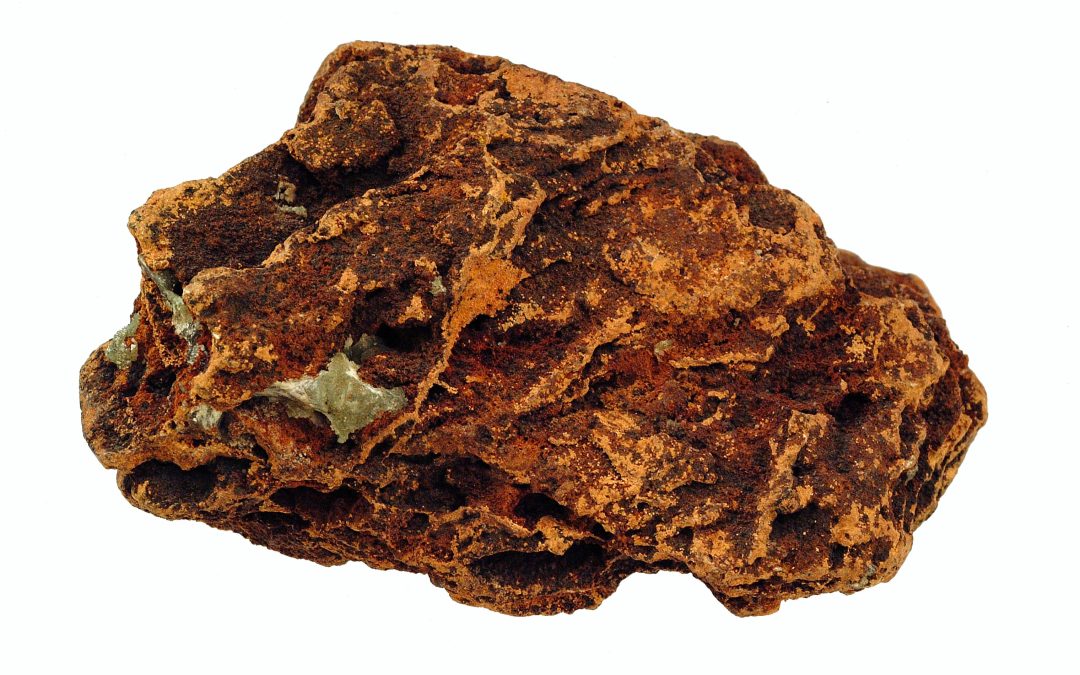
The iron ore, by the report's reading, almost certainly came from the surrounding wetland. The classic Iron-Age ore of lowland Britain is bog iron — the soft, rusty, limonitic precipitate that bacteria lay down in bogs and stream-bottoms where iron-rich groundwater meets air. It is not a glamorous material. It is the dirt-coloured, orange-streaked sludge you dig out of a ditch in Norfolk. But it is there for free, in almost unlimited quantity, and any Iron-Age community that understood the trick could turn it into metal without ever owning a mine. The bloom that came out of a furnace like the one at Thornton would have weighed, by the standard experiments with short-shaft bloomeries of this period, somewhere between two and ten kilograms — a heavy lump, half iron and half entrained slag, that then had to be reheated and hammered for days to drive out the rest of the slag and turn it into something a smith could use.
Why this matters is the second paragraph of the Yorkshire Post report, which the Archaeology Magazine write-up of the same find quotes: the metal is thought to have been used to construct the chariots and other grave goods discovered in burials in the region. The Iron-Age burials of East Yorkshire — the Wetwang Slack inhumations, the rather grander chariot burials at Arras, and the parade of wealthy graves around the Wolds and the Vale of Pickering — are full of iron wheels, iron yokes, iron scythes and iron fittings. Most of that iron is small in volume but heavy in skill: a wheel rim, a horse bit, the iron tyres that hold a wooden wheel together. To make it, somebody had to run a furnace, somewhere near enough to bog iron to keep the charcoal-spend down. The Thornton furnace is, plausibly, the answer to the small, persistent question of where that metal was actually coming from.
It is also, I think, an unromantic and therefore persuasive kind of find. Nobody was going to lift the Thornton pit onto a museum's plinth. There is no boar-headed helmet to put beside the caption. There is the bottom of a furnace and a chemistry problem — green wood turning to charcoal under a pond of slag — and the argument, on the strength of that, that the Iron-Age people of the West Yorkshire wet margin knew what they were doing in iron. They did. The chemistry of a bloomery is unforgiving. The furnace has to be hot enough to reduce the ore but not so hot that the iron absorbs enough carbon to turn into cast iron, which the smelter of two thousand four hundred years ago could not then have wrought. The tuyeres have to be aimed correctly; the charcoal-to-ore ratio has to be roughly one-to-one; the burn has to last long enough for the bloom to form under its own weight. The fact that a furnace at Thornton got the metal out of the ground at all is, on its own, evidence of a working tradition — not a first experiment, but a recipe.
And the bog connection is what closes the loop. The same West Yorkshire lowlands that the Iron-Age furnace is sitting in are the same West Yorkshire lowlands that produced the ore the furnace was burning. If you want a picture of an industrial ecosystem that is genuinely local — fuel from one patch of woodland, ore from a wetland within walking distance, finished iron going into the chariot burials fifty miles east — the Late Iron Age of the Humber basin is one of the cleanest examples in Britain. The bog iron ore in the photograph is from a different site, but the stone it sits on is exactly the kind of stone a smelter at Thornton would have picked up out of a ditch, broken to fingernail size, and stacked into a furnace that ran out the bottom into a pit full of green wood.
The hole in the ground outside Thornton will not be making any headlines next week. The story it tells, though — that there were people in northern England two and a half millennia before the Romans arrived who knew how to take iron out of a swamp and turn it into wheels — is a story that is too easy to forget. The Romans get the credit for bringing iron technology to Britain, because they wrote it down. The archaeological record, here as in several other corners of the Humber basin, suggests the credit is partly mislaid.
Sources
- Jessica Esther Saraceni — Iron Smelting Site Discovered in Northern England — Archaeology Magazine, 20 August 2026. (Datelined THORNTON, ENGLAND; references The Yorkshire Post.)
- Bog iron (GeoDIL number – 1324).jpg — Wikimedia Commons, CC0 / public domain. University of North Dakota Mineralogy Collection, hand specimen of bog iron ore (limonitic / hydrated iron oxide).
- Bloomery — Wikipedia, for the chemistry of shaft furnaces, the charcoal-to-ore ratio, and the slag-and-bloom mechanism referenced in the body.
