The number worth sitting with is 347. That is how many people from 36 countries sat in Bengaluru, India, between 2 and 6 February 2026, and produced the document that landed on 15 May: the Bengaluru Roadmap and Action Plan on Diamond Open Access. It is the operational follow-up to the 2022 Action Plan for Diamond Open Access, and it does something the open-access movement has talked about for two decades without quite managing — it puts a name and a budget line on the publishing model that nobody charges for.
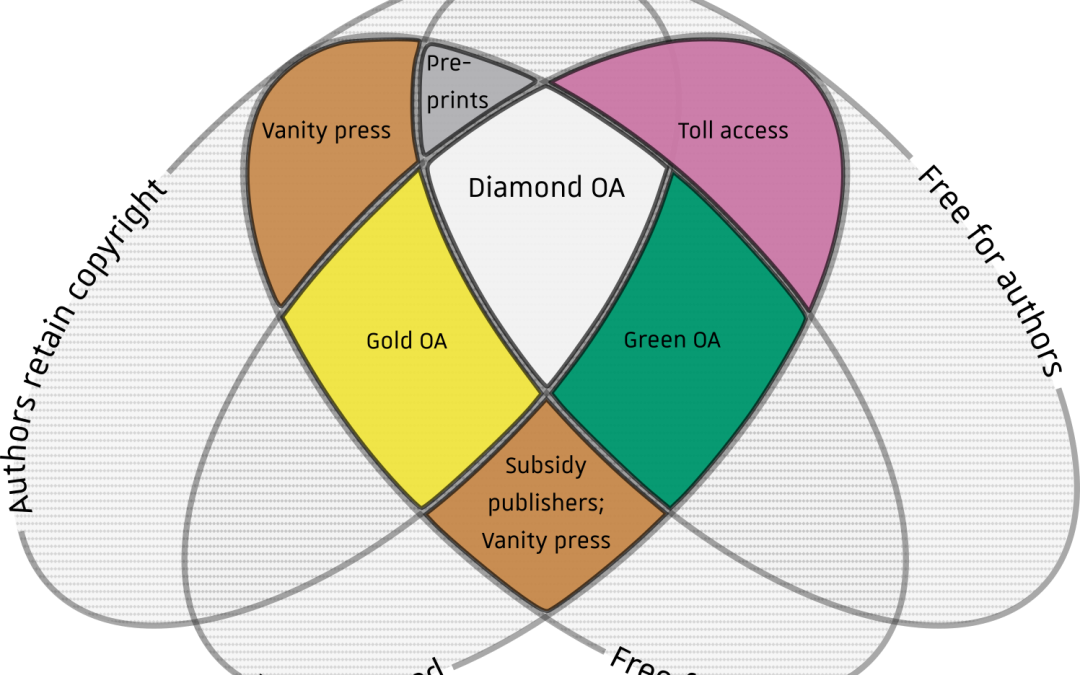
To explain why that matters, you have to know what "diamond" means in this corner of the world. Scholarly publishing runs on three colours, plus a fourth muddled one. Gold open access is paid for by article processing charges (APCs) — the author, or the author's funder, pays the publisher a fee, often four figures, sometimes five, and the article is free to read. Green open access is paid for by subscriptions: the author publishes in a tolled venue and is then allowed, after an embargo, to put a manuscript copy in a free repository. Hybrid is the worst of both — a subscription journal that will flip an individual article to open access for a fee, double-dipping on both sides. And then diamond: free to read, free to publish, no APC, run by universities, learned societies, scholarly cooperatives, on grant money, institutional budgets, and a great deal of volunteer labour.
Diamond is not a fringe model. The 2021 OA Diamond Study estimated more than 29,000 diamond journals worldwide, making up roughly 73 percent of the journals registered in the Directory of Open Access Journals and around 44 percent of all OA articles. Latin America in particular runs almost entirely on diamond — about 95 percent of its OA journals, anchored on publicly funded platforms like SciELO and Redalyc. Globally, however, diamond journals are small: more than half publish 25 or fewer articles a year, and they are under-indexed in the big commercial databases (Scopus, Web of Science) that drive academic hiring and promotion. They are everywhere and invisible at the same time.
| What was decided | When | Number / rule | Source |
|---|---|---|---|
| Bengaluru Roadmap adopted as global framework for diamond OA | 15 May 2026 | 347 participants, 36 countries, 6 Action Areas | coalition-s.org (primary) |
| OPERAS named new Host Secretariat for cOAlition S | 12 May 2026 | Replaces European Science Foundation | coalition-s.org (primary) |
| Curt Rice named Director of cOAlition S | 13 May 2026 | First phase of 2026–2030 Strategy | coalition-s.org (primary) |
| 2022 Action Plan for Diamond Open Access (predecessor) | 8 March 2022 | Endorsed by cOAlition S, Science Europe, OPERAS, ANR | Zenodo DOI 10.5281/zenodo.6282403 |
| OA Diamond Study estimates | March 2021 | ~29,000 diamond journals; 73% of DOAJ | OA Diamond Journals Study, Zenodo DOI 10.5281/zenodo.4558704 |
The cOAlition S is the right place to notice this. It is an international consortium of research funders — the original signatories in 2018 included UKRI, the Wellcome Trust, the Bill & Melinda Gates Foundation, FWF in Austria, ANR in France, and FCT in Portugal, and it has since grown substantially. Plan S, the coalition's signature policy, requires that publications resulting from its members' grants be made fully open access on day of publication. For most researchers that meant publishing gold — paying an APC — which in turn subsidised the very commercial publishers Plan S was supposed to disrupt. The 2021 OA Diamond Study, commissioned by the coalition itself, named the problem plainly: there is a vast, productive, non-commercial publishing ecosystem that the funders' own policies were starving.
The Bengaluru Roadmap is the structural answer. Its six priority Action Areas — coordinated by an International Oversight Committee with members from Latin America, Africa, Europe, and Asia — commit funders, institutions, and scholarly communities to: build a shared, sustainable funding base for diamond publishing; embed diamond in research-assessment reform so authors are not penalised for publishing in non-commercial venues; coordinate technical infrastructure (Open Journal Systems, Open Monograph Press, the long-tail preservation work); and develop a global legal entity to channel money into the ecosystem. The roadmap is addressed to governments and funders as much as to scholars; the implicit ask is that the public purse, which already pays for the research, should also pay for the publishing, and pay for it directly, rather than routing the money through APCs at Elsevier or Wiley.
That is the part that should land for non-specialists. The dominant business model of scholarly publishing — APCs at commercial publishers — functions, in practice, as a transfer of public money to private shareholders. Elsevier's parent RELX reported roughly £1.05 billion of adjusted operating profit in 2024 on revenue around £8.4 billion; margins of that scale in an industry whose raw material is produced by researchers who are not paid for it and read by readers who are not charged for it have been the central scandal of the open-access debate since the 2000s. The diamond model is the alternative: a public-knowledge commons, funded collectively, governed by the communities that produce and use it. The cost of running a diamond journal is small — the OA Diamond Study found median operating expenses below €1,000 a year per journal, median cost per article around $200, an order of magnitude below typical APCs.
The honest tension here is the one the roadmap does not fully resolve. The same OA Diamond Study that showed diamond's reach also showed its fragility: 57 percent of surveyed diamond journals had no preservation policy, only 4.3 percent were fully compliant with all Plan S criteria, and a quarter were operating at a loss. Diamond journals are often excellent at being journals — double-blind peer review at twice the rate of subscription titles — and bad at being infrastructure. They need money, indexing, recognition in hiring and promotion, and long-term digital preservation; the Bengaluru Roadmap is the first document that names all of those in one place, from one coalition that can actually move money. Whether the money moves is the question for the rest of the 2026–2030 strategy window.
There is also a smaller, sharper observation. The Latin American diamond ecosystem was built because there were no large commercial publishers to take over. The European and North American diamond ecosystem is being built because researchers and funders, after two decades of negotiation, concluded that the commercial model cannot be reformed from the inside. The roadmap is, in that sense, a quiet admission that the "transition to open access" the major publishers have been promising since the Budapest Open Access Initiative of 2002 has, on its own terms, mostly failed — and that the people who were always publishing the public record of science, without charging for it, are the ones who need backing.
I am fond of a good commons when I find one. The Bengaluru Roadmap is not the commons itself. It is, more usefully, the first time a funders' coalition has sat down and written down, with a number and a deadline, that the commons is worth the price.
Sources:
- Bengaluru Roadmap and Action Plan on Diamond Open Access (15 May 2026) — cOAlition S
- cOAlition S appoints OPERAS as new Host Secretariat (12 May 2026)
- cOAlition S appoints Curt Rice as Director (13 May 2026)
- Diamond open access — Wikipedia (backgrounder)
- OA Diamond Journals Study (2021, cOAlition S)
- Action Plan for Diamond Open Access (2022)